Planned
The samples that stayed on Mars
Congress defunded Mars Sample Return in January 2026. Perseverance's sealed tubes sit in Jezero while China's Tianwen-3 aims to bring back martian rock by 2031.
sample-returnpolicymission2 min read
Where we have actually got to
No human being has ever stood on Mars. Everything else — every telescope, every probe, every rover, every one of the missions that never arrived — is the run-up. This is the whole record, newest first. The entry at the top is the one still waiting to be written.
Most recent entry —Thirteen Starship flights, and Mars slips to 2028(2023 – 2026)
Scroll back through how we got here
This entry has not been written. Everything below is what it has taken to get within reach of writing it — newest first, running back to the formation of the planet itself.
Congress defunded Mars Sample Return in January 2026. Perseverance's sealed tubes sit in Jezero while China's Tianwen-3 aims to bring back martian rock by 2031.
Nothing heavier than Perseverance's 1,025 kg has ever been set down on Mars. Starship proposes roughly a hundred tonnes, and it has not yet reached orbit.
Europe's drilling rover has missed three launch windows and lost its Russian lander. It now flies in October 2028 on an American rocket, for Oxia Planum in 2030.
Earth and Mars line up for a cheap transfer once every 779.9 days. A six-week hardware delay does not cost six weeks; it costs more than two years.
Getting people there
2027 onward, 4 milestones
Funded, in development, and not yet flown. Nothing in this era is speculation — every entry is hardware somebody is building or a constraint that is not negotiable. None of it has happened yet.
SpaceX has flown Starship thirteen times since April 2023. None has reached orbit, none has transferred propellant in space, and the 2026 Mars window has been given up.
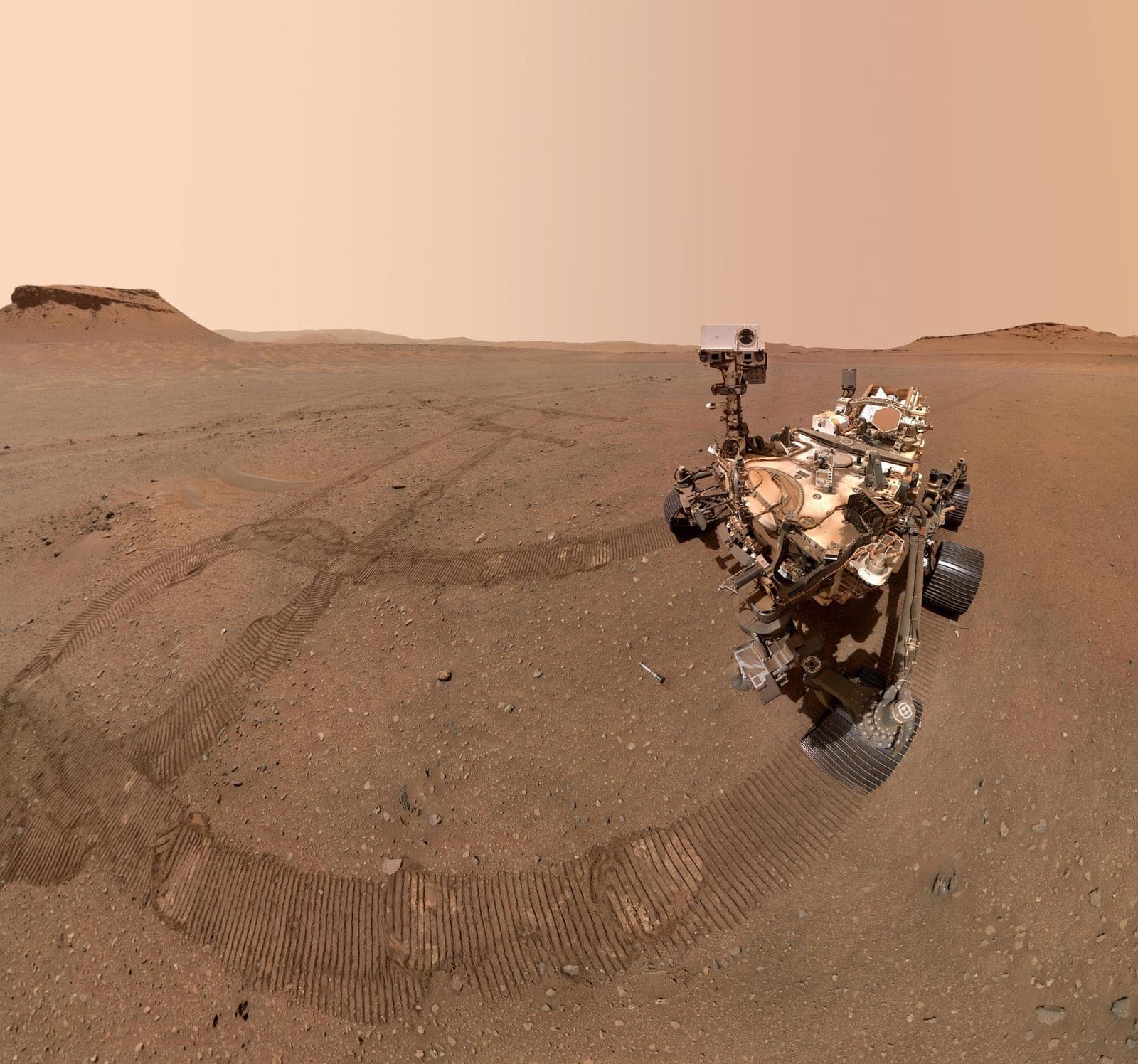
Ten sealed tubes have lain in the dust at Three Forks since January 2023, waiting for a retrieval mission that Congress declined to fund three years later.
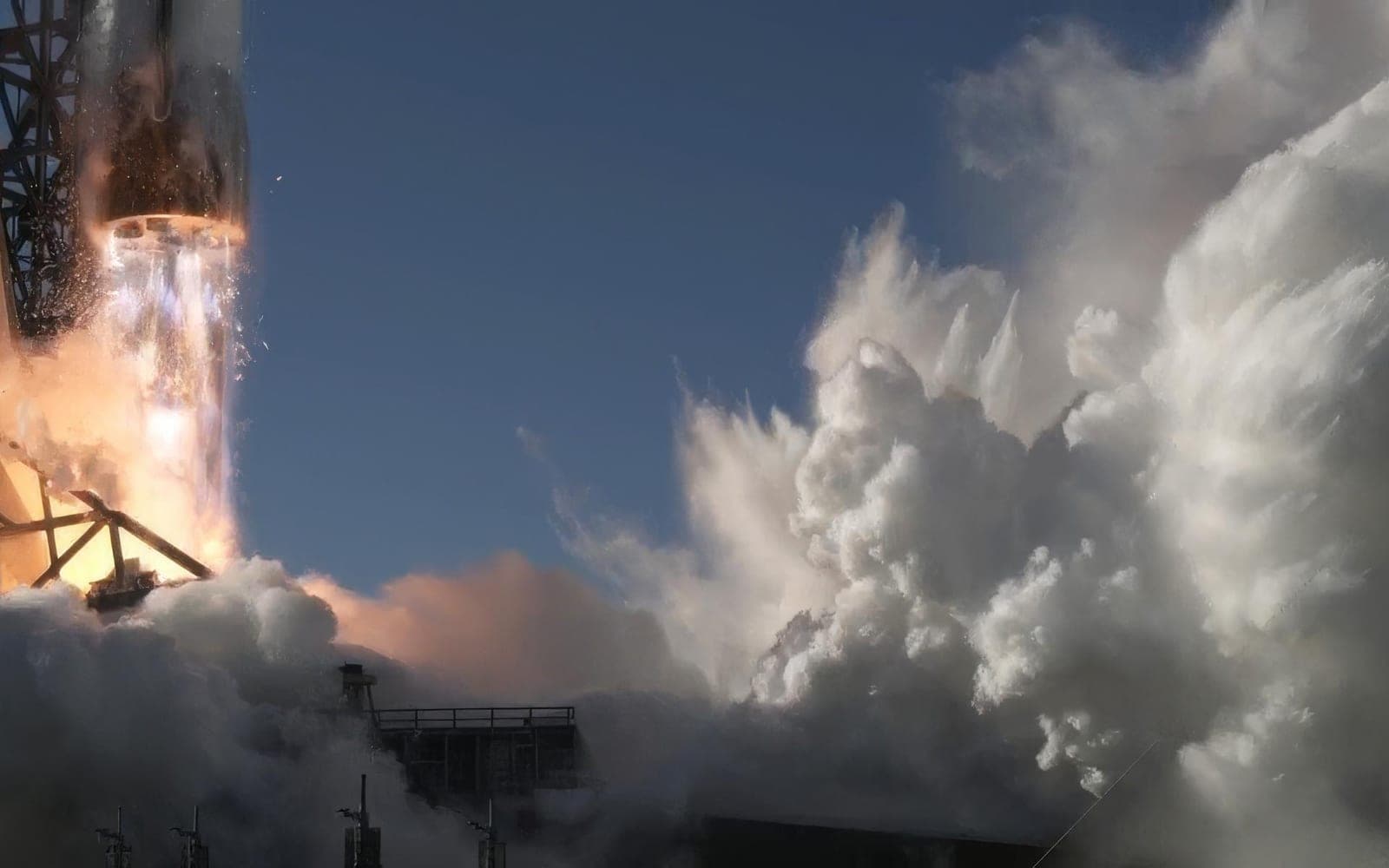
Nothing had left Earth for Mars since July 2020. ESCAPADE's twin orbiters broke the drought — then parked at a Lagrange point to wait a year for the transfer window.
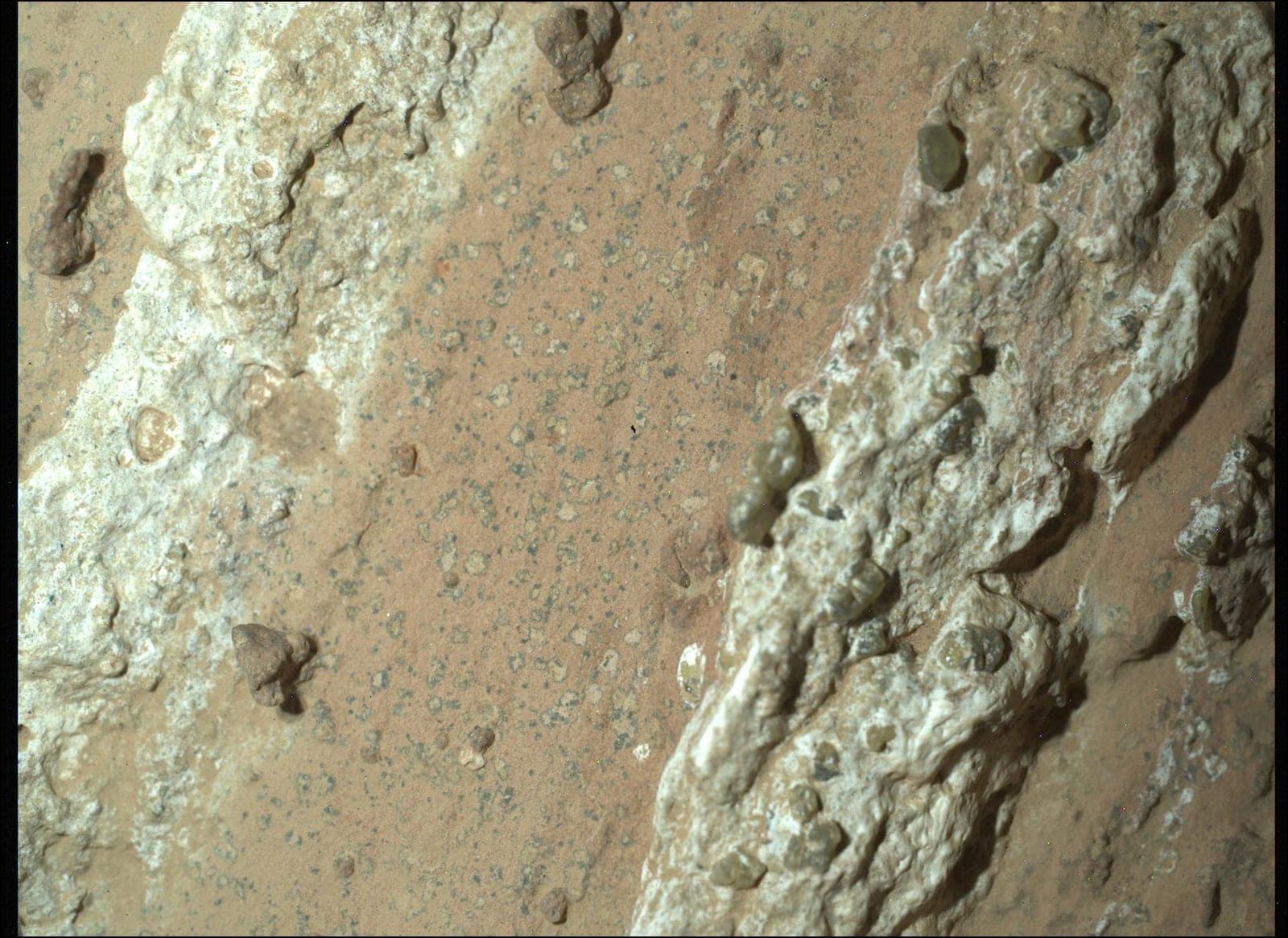
Perseverance drilled a rock ringed with vivianite and greigite. On Earth microbes make those minerals; on Mars nobody has yet found a plain chemical route that fits.
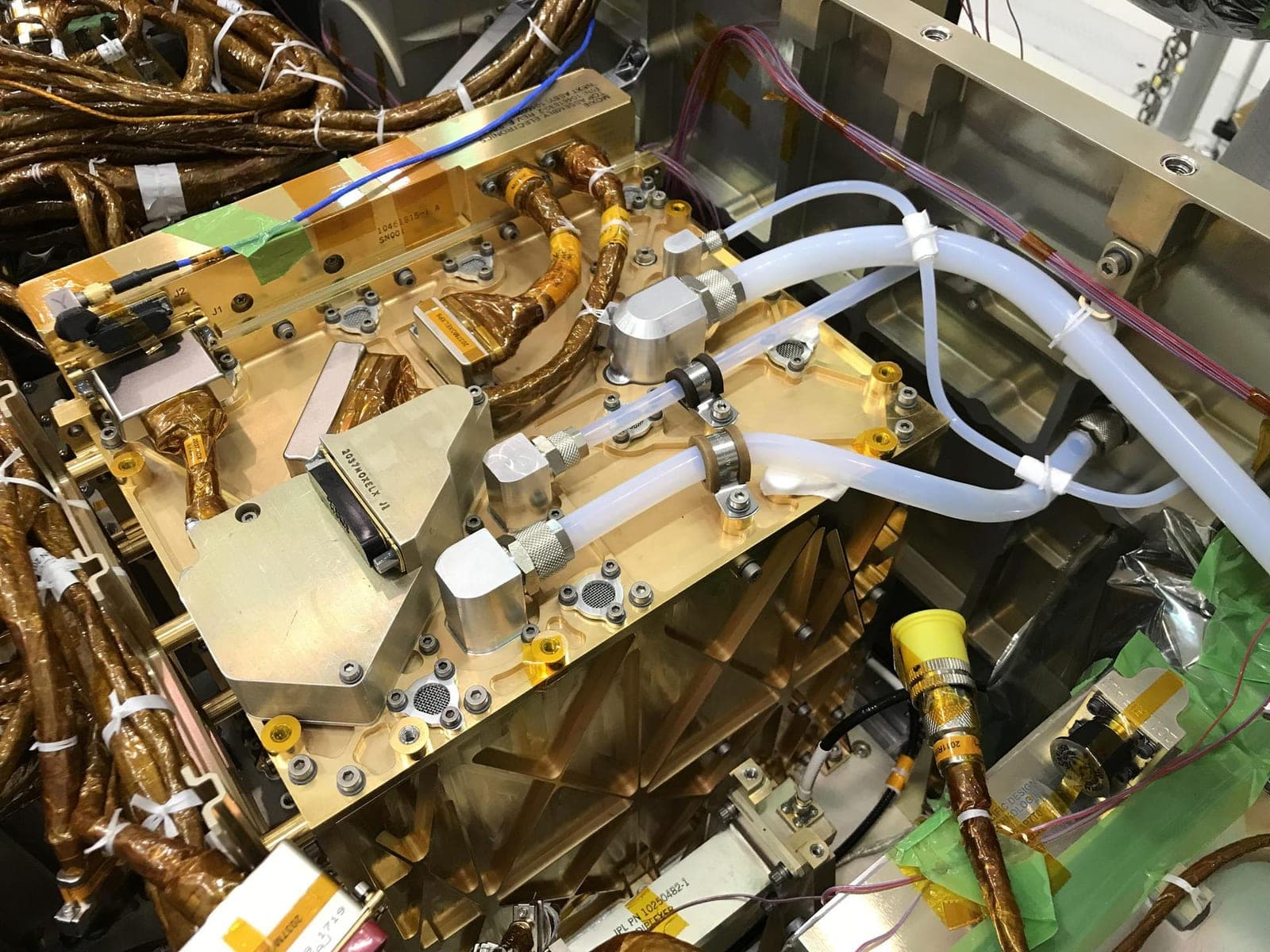
Perseverance carried a toaster-sized box that heated Martian carbon dioxide to 800°C and made 5.4 grams of oxygen — the first time a spacecraft manufactured a consumable on another planet.
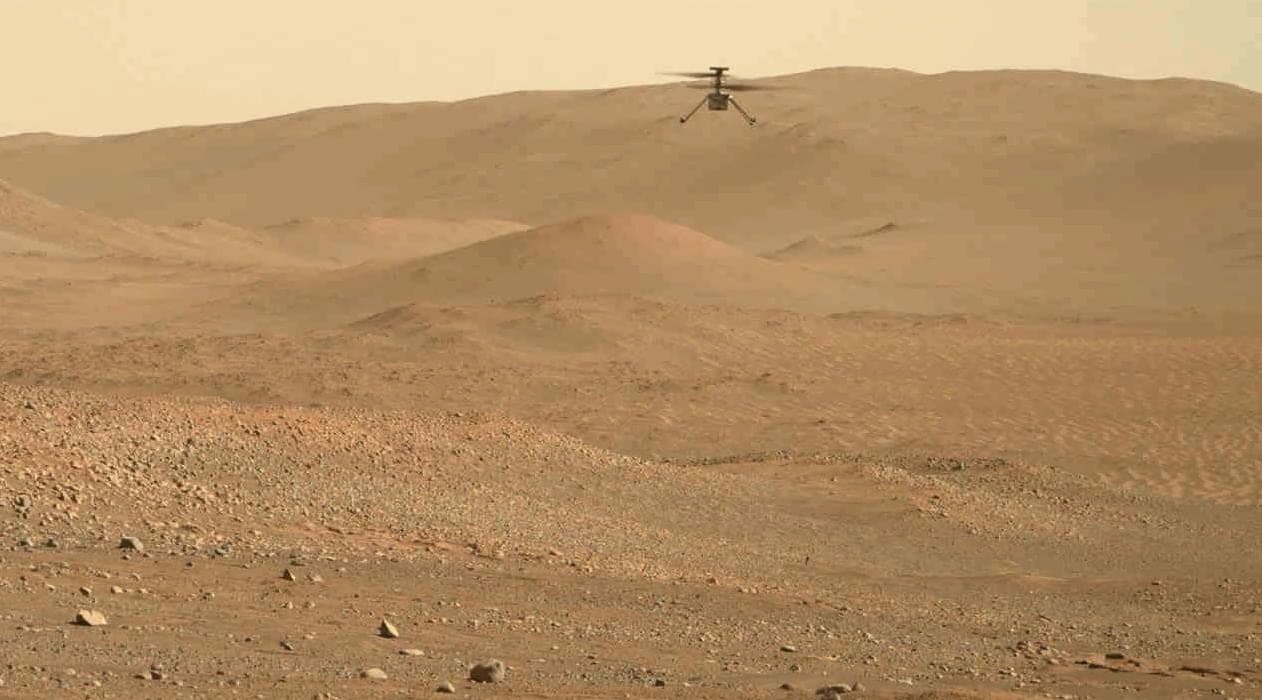
A 1.8 kg helicopter hovered three metres above Jezero for forty seconds. Seventy-two flights later, featureless sand confused its navigation camera and damaged all four blades.
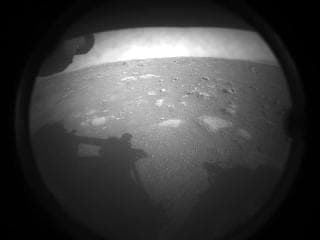
Five off-the-shelf cameras filmed the parachute opening and the sky crane lowering a one-tonne rover into a dry river delta. The descent microphone recorded nothing usable.
Tianwen-1 entered orbit on 10 February and dropped Zhurong onto Utopia Planitia three months later — orbiter, lander and rover delivered on a country's first attempt.
The UAE had no deep-space programme six years before a 27-minute burn spent half of Hope's fuel to capture the first interplanetary mission flown by any Arab nation.
Everyone goes at once
2021 – 2026, 9 milestones
Three nations arrived within a fortnight of each other. A helicopter flew in an atmosphere one percent as thick as ours, and a toaster-sized box made oxygen out of Martian air. This is the era still being written.
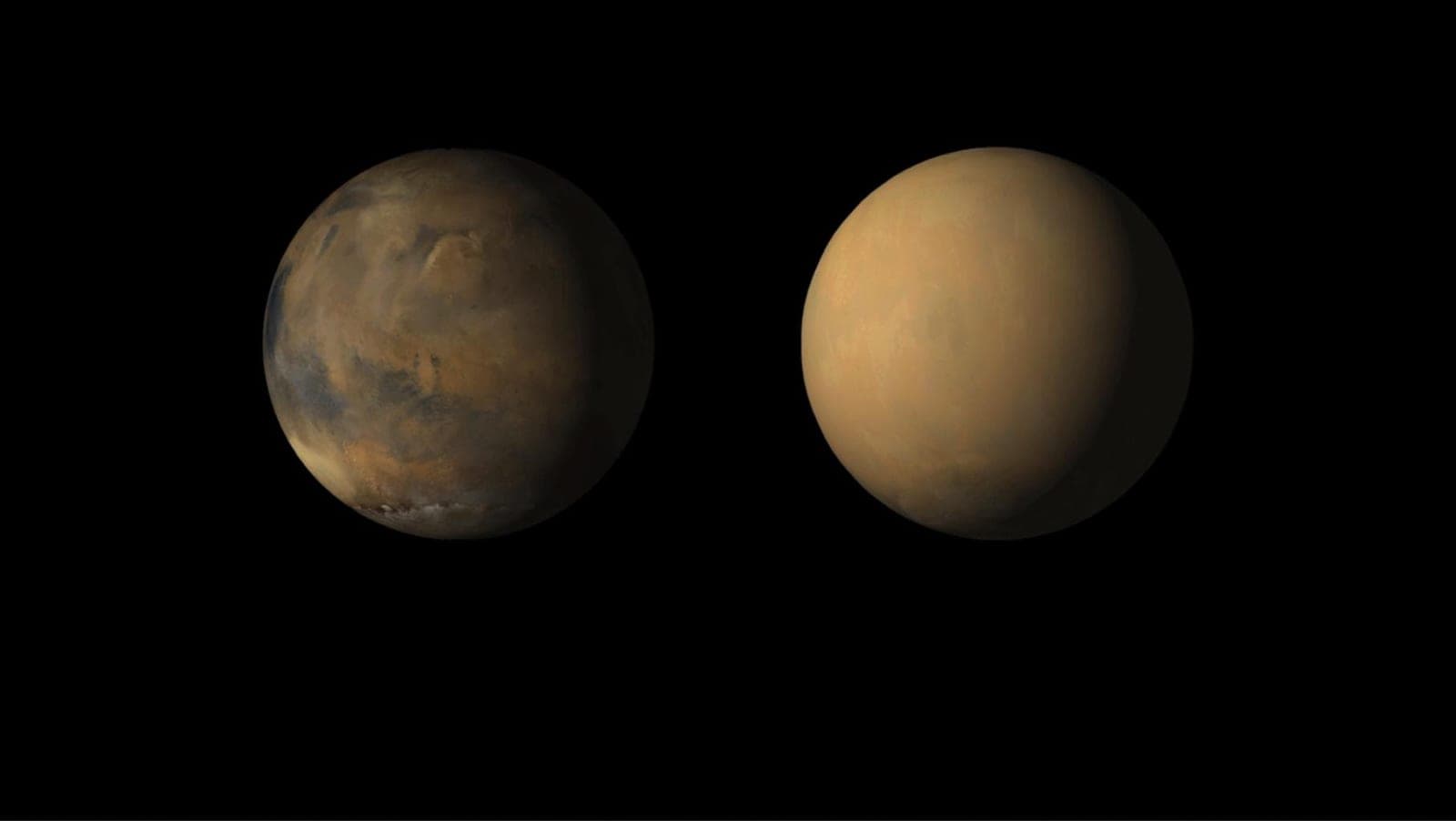
A dust cloud spotted on 30 May 2018 grew to cover Mars and blacked out the sky over a rover that had driven 45 km on a 90-day warranty.
MarCO-A and MarCO-B, 13.5 kilograms each, were the first CubeSats ever to leave Earth orbit — and they carried InSight's descent telemetry home live at 8 kilobits per second.
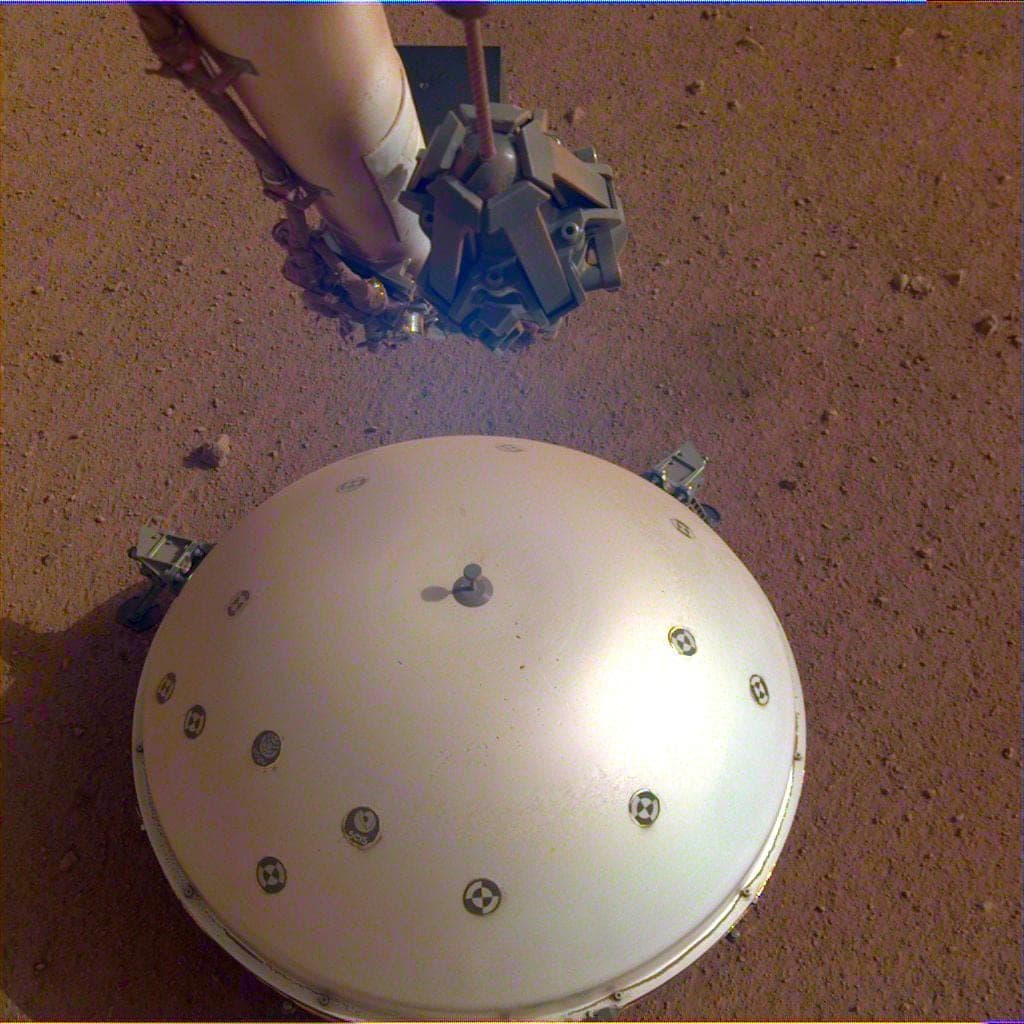
The first seismometer set directly on another planet's surface logged 1,300 marsquakes and sized a liquid core. Its heat probe never managed to bury itself.
Eight eroding scarps at 55 to 58 degrees latitude cut open water ice more than 100 metres thick, its top just 1 to 2 metres down — and visibly banded.
One second of saturated gyro data convinced a lander it was already underground. It cut its parachute at 3.7 km and hit Mars at 540 km/h.
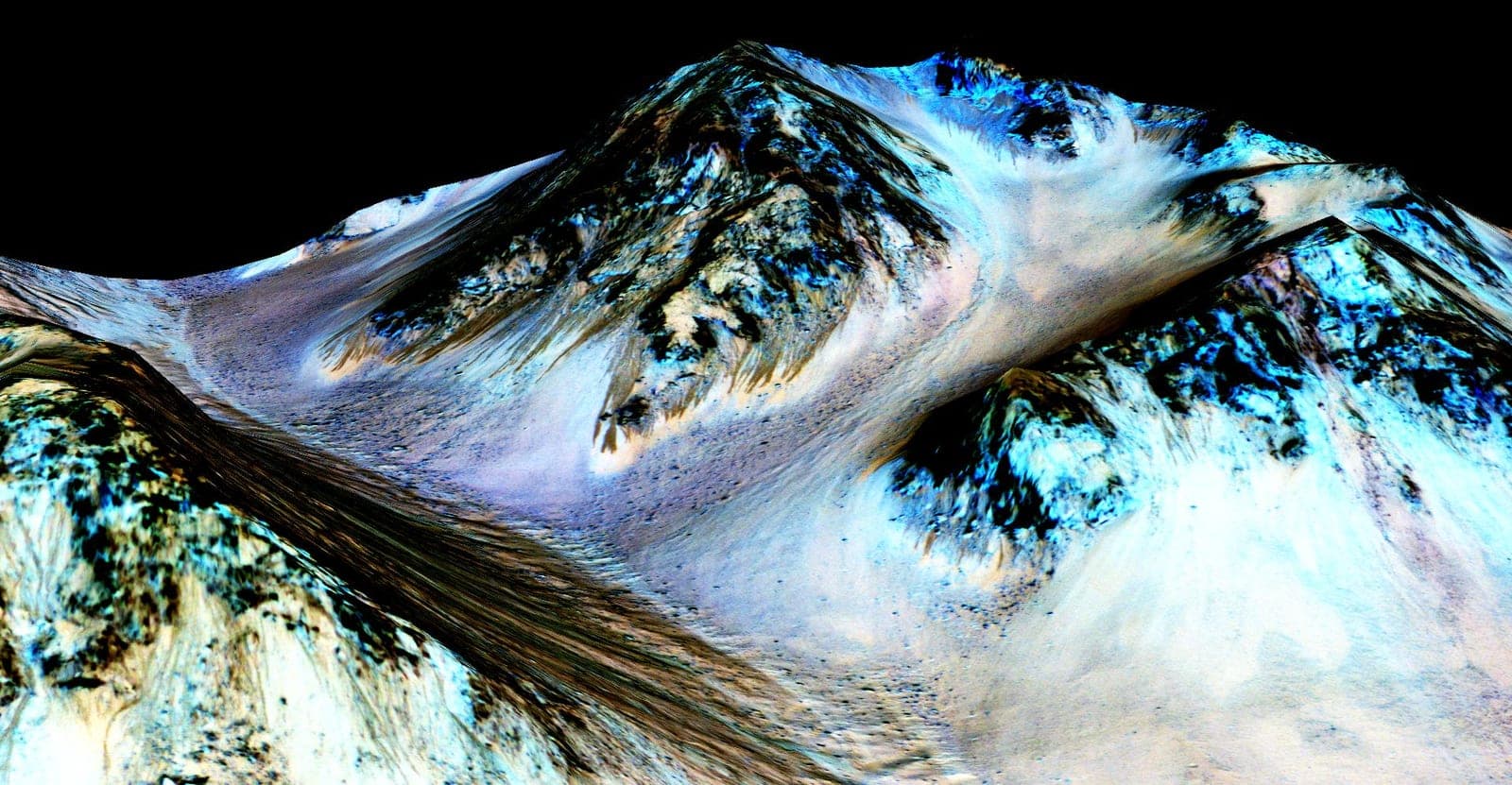
NASA announced briny water seeping down warm slopes. Two years later the same streaks were shown to stop exactly where dry sand stops, and the claim collapsed.
India placed a 15-kilogram science payload in Mars orbit for about 74 million dollars, becoming the first nation to reach Mars orbit on its first attempt.
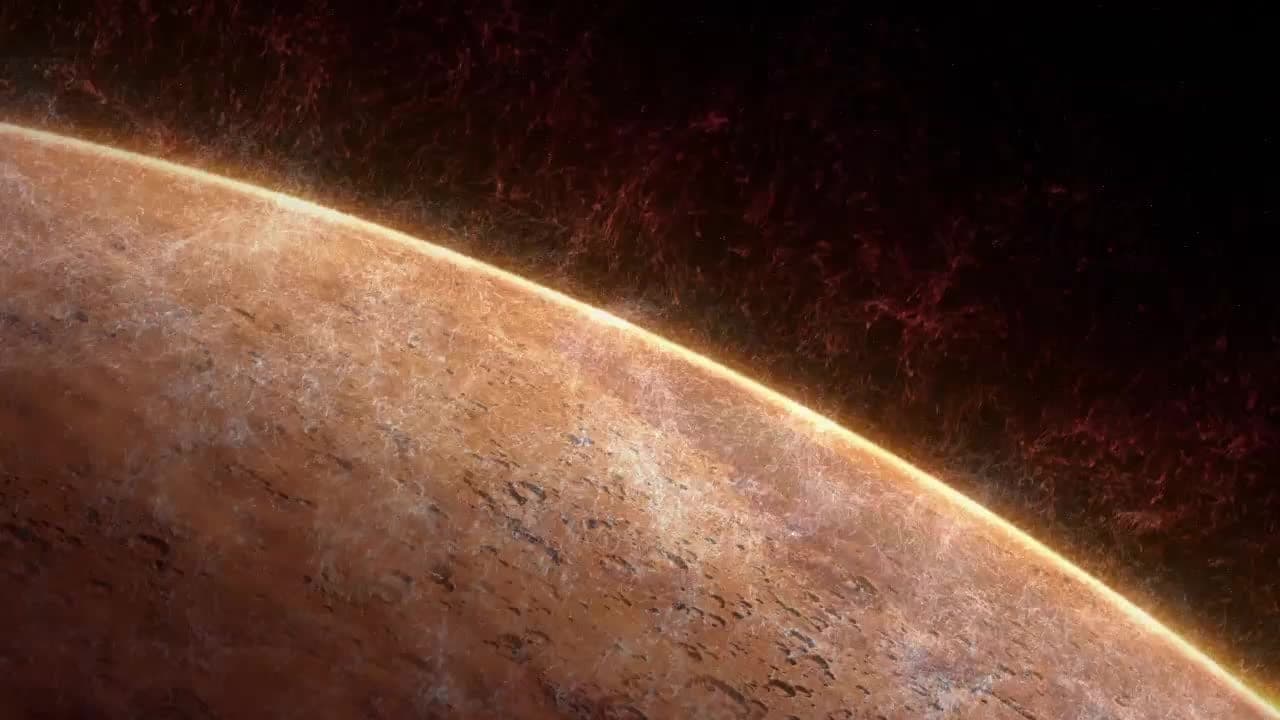
The first orbiter built for the upper atmosphere measured Mars shedding roughly 100 grams of gas per second to the solar wind — and about ten times that during solar storms.
The rover's dosimeter logged 1.8 millisieverts a day in transit and 0.67 on the floor of Gale Crater — a round trip comes to roughly one sievert, two thirds past NASA's career ceiling.
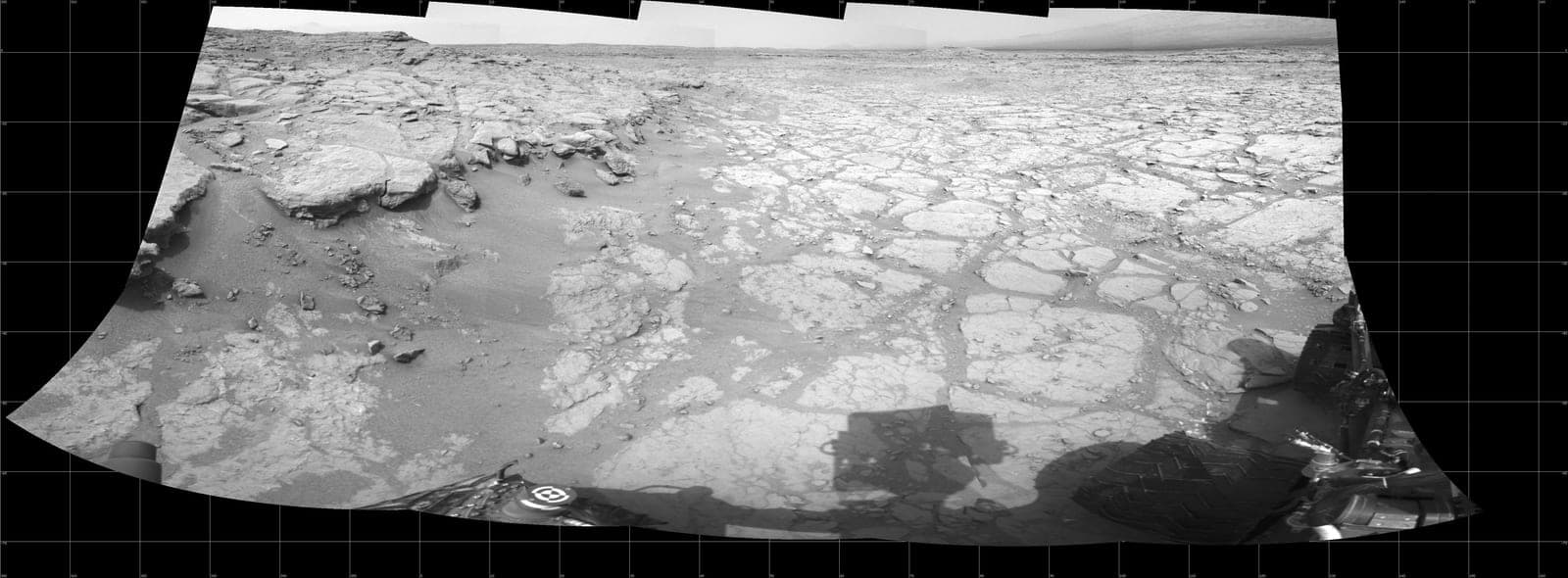
Curiosity's first drill hole, 6.4 cm into a mudstone called John Klein, produced clay, sulfur and nitrogen — and an ancient lake of fresh, neutral water.
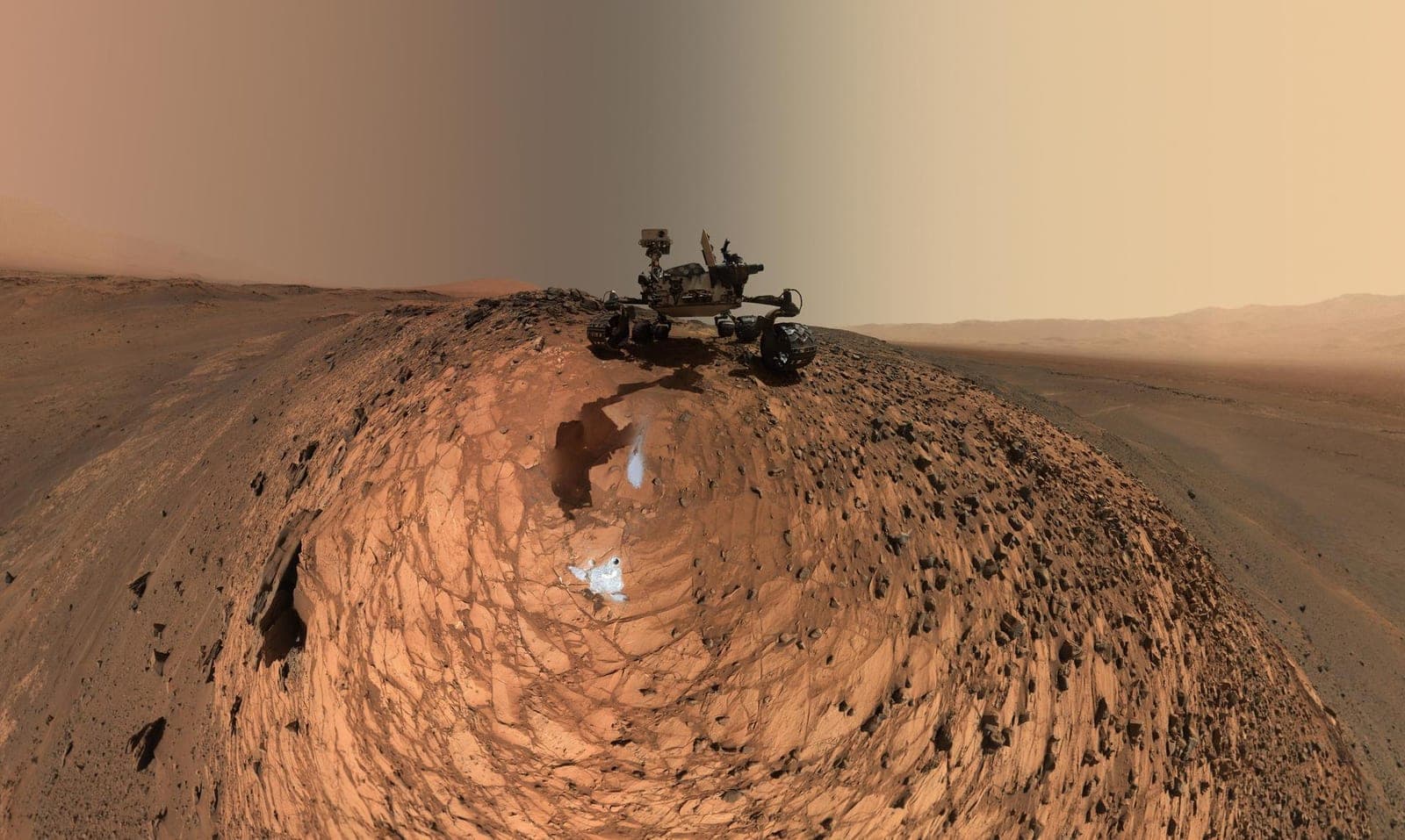
A rocket-powered crane lowered an 899-kilogram rover onto the floor of Gale Crater on cables. The system had never been flown, and it worked first time.
A habitable past
2012 – 2020, 11 milestones
A nuclear-powered laboratory was lowered onto Mars by a hovering crane, and within a year it had answered the question the previous fifty years had been circling: yes, this was once a place life could have lived.
Mars-500 ran a Mars mission at full length with nobody leaving the building. Four of the six crew came out with a sleep or behavioural disorder.
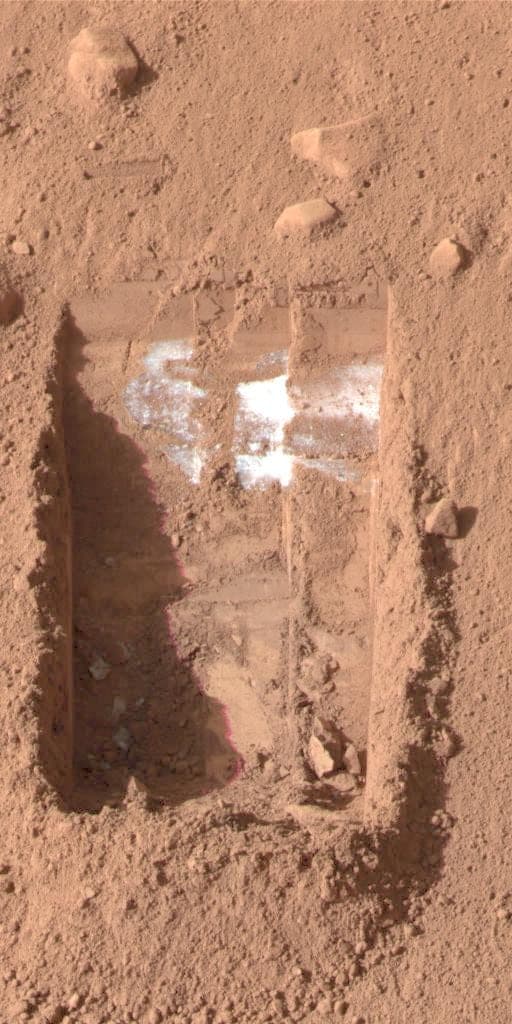
Phoenix landed on rockets at 68 degrees north and scraped down to white material. It vanished in four sols — ice, not salt — and in September the lidar watched snow fall.
The sharpest camera ever sent to another planet resolves 30 centimetres per pixel from 300 km up, and the same spacecraft relays much of what the rovers below it send home.
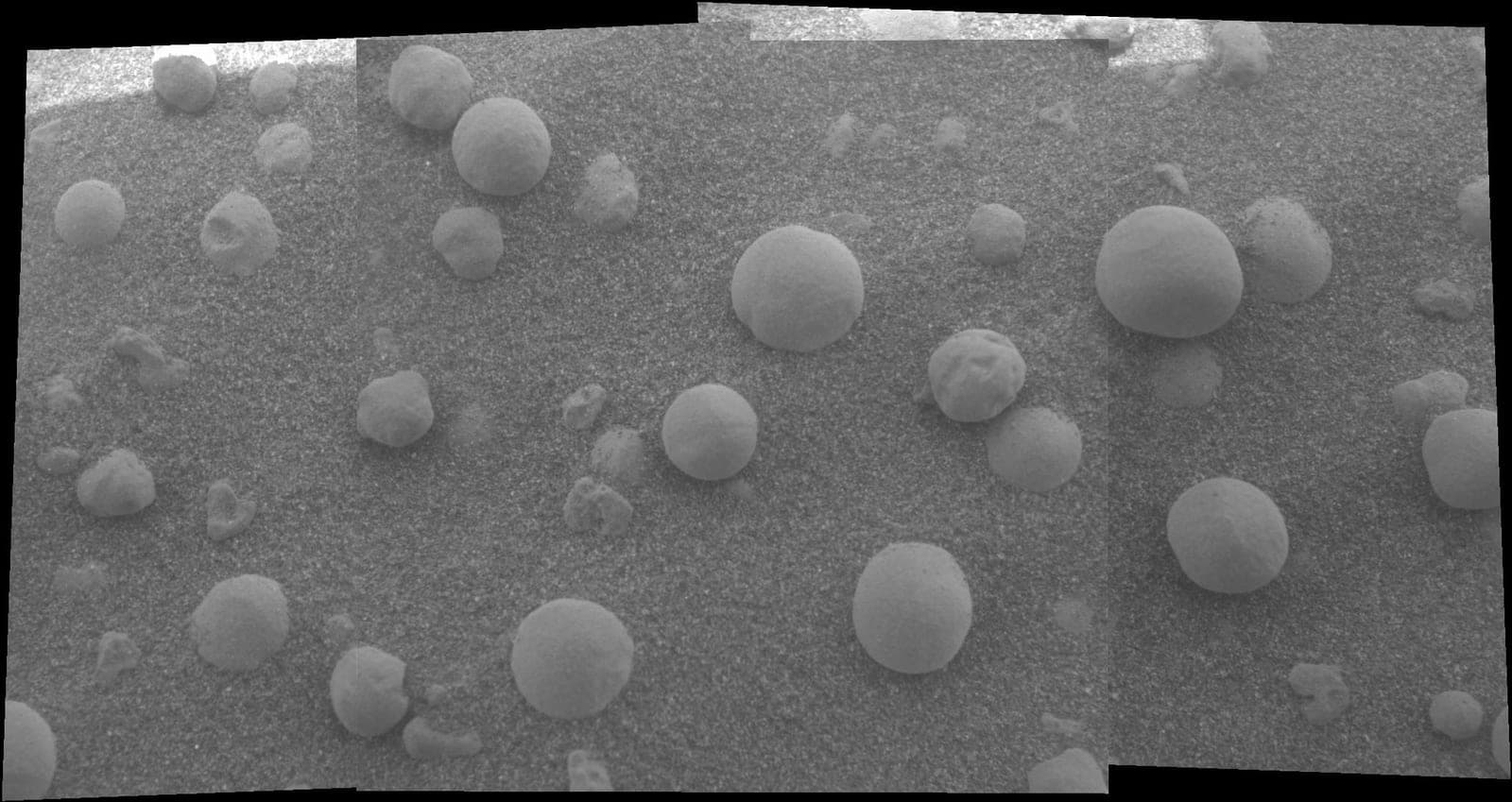
Built for 90 sols apiece, Spirit lasted six years and Opportunity fourteen. Within eight weeks Opportunity had jarosite and hematite spherules: rock soaked in acidic water.
Mars Express slid into orbit on Christmas morning. Beagle 2, released six days earlier, went silent — and was found in 2015 on the ground, partly unfolded.
Japan's first interplanetary probe lost the fuel to stop at Mars to a malfunctioning valve in 1998. ISAS flew it five more years anyway, then watched it coast past at 1,000 km.
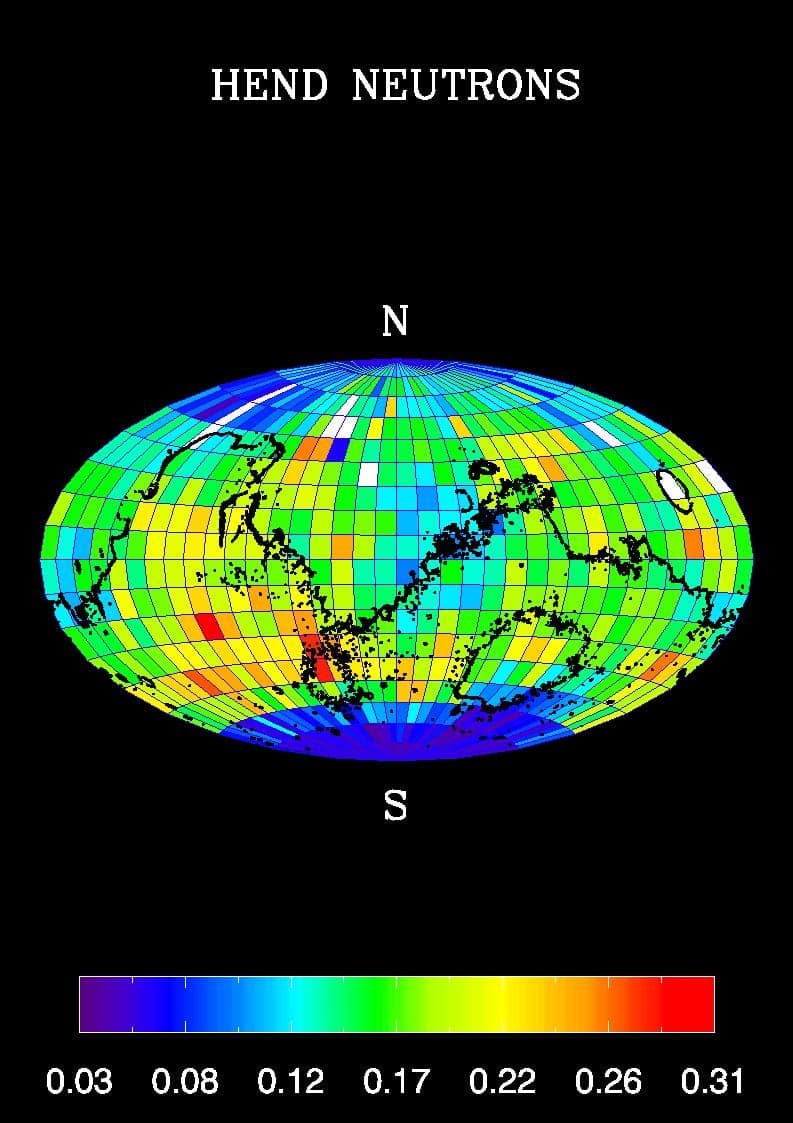
Neutron counts fell away over both poles. Odyssey read that as ice within a metre of the surface — by one estimate enough to fill Lake Michigan twice, and a target for landers.
Climate Orbiter flew to 57 km altitude instead of 226 because two teams used different units. Ten weeks later Polar Lander probably shut its engines off 40 metres up.

Mars Observer died three days short of orbit in 1993. Its instruments were rebuilt as Global Surveyor, which found fossil crustal magnetism and geologically fresh gullies.
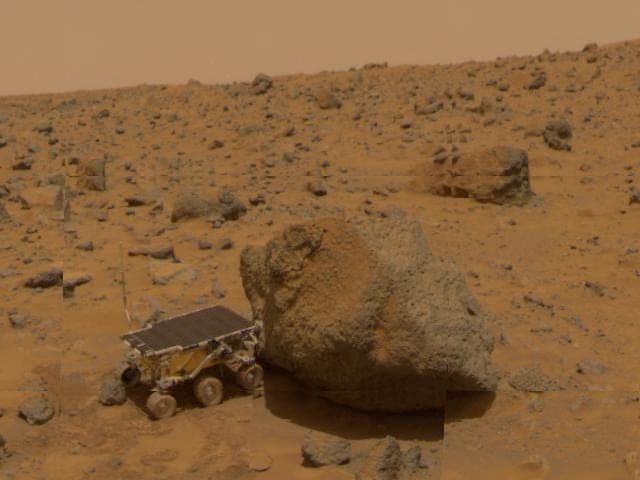
Airbags took the shock: the lander rebounded twelve metres, bounced at least fifteen more times across Ares Vallis, then opened to release Sojourner, 10.6 kg of rover.
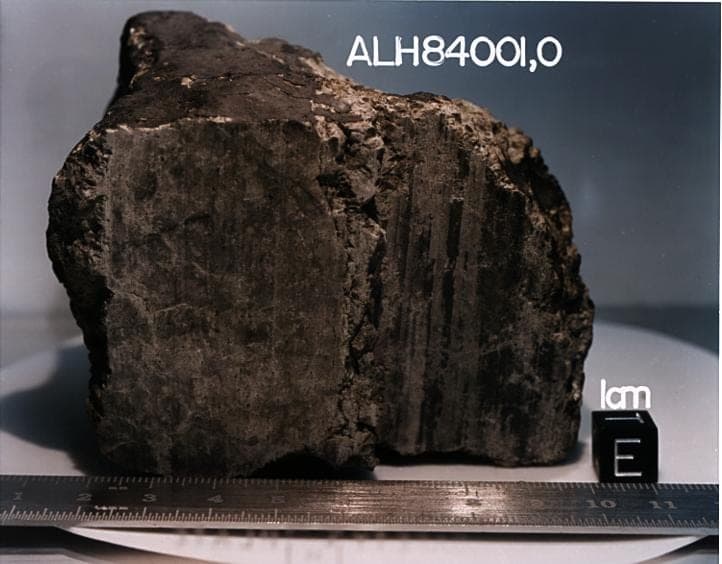
Bill Clinton stood in front of the cameras for a 1.9 kg rock from Antarctica. Within five years every line of evidence for Martian microbes had a non-biological answer.
Two 1993 calculations showed the Martian axis wanders chaotically — one integration ran it from 11 to 49 degrees over 80 million years. The present 25.19 degrees is a low value, not a constant.
Phobos 1 died in September 1988 to a flawed command sequence. Phobos 2 reached Mars orbit and failed in March 1989, weeks before dropping its landers.
Gas sealed in shock glass inside a 7.9 kg Antarctic stone matched the air Viking had measured in 1976. Terrestrial laboratories suddenly held free samples of Mars.
Learning to land
1980 – 2011, 14 milestones
The era in which getting to Mars stopped being the hard part and landing on it started. Airbags, aeroshells, a lost orbiter that confused pounds with newtons, and two solar-powered rovers that outlived their ninety-day warranties by years.
One of Viking's three biology experiments came back positive at both landing sites. The gas chromatograph found no organic molecules at all, and the argument has never closed.
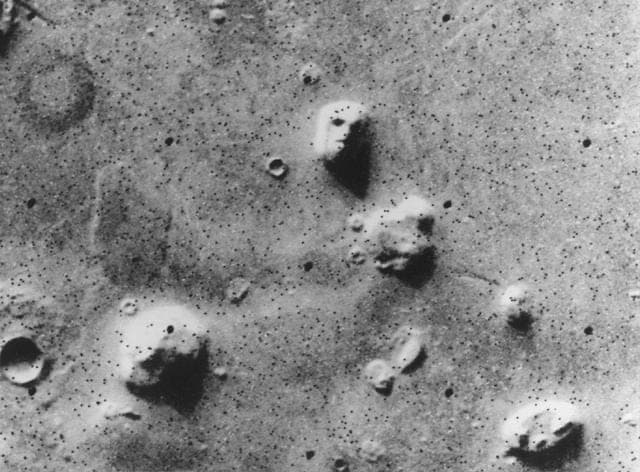
Viking 1 orbiter frame 35A72 caught a mesa a kilometre and a half across under a low sun. The shadows read as eyes, nose and mouth, and the argument ran for 25 years.
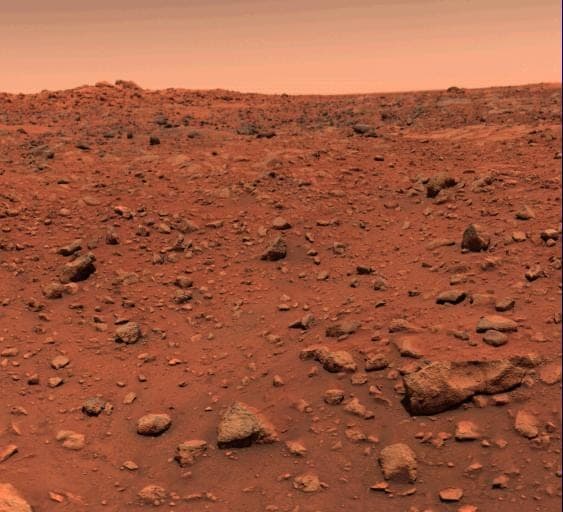
Two orbiters, two landers and roughly a billion 1970s dollars. Designed for 90 days on the surface, Viking 1 kept transmitting from Chryse Planitia for over six years.
A nuclear engine ran 28 times at Jackass Flats at twice the exhaust velocity of any chemical stage. The budget office zeroed it, and the programme ended in January 1973.
Four spacecraft launched in 19 days. Mars 4 flew past at 1,844 km, Mars 5 leaked after nine days, Mars 6 died at touchdown, and Mars 7 missed the planet by 1,300 km.
Mars 2's lander crashed and became the first human object on the surface. Mars 3 touched down intact, sent 20 seconds of signal, and went silent for good.
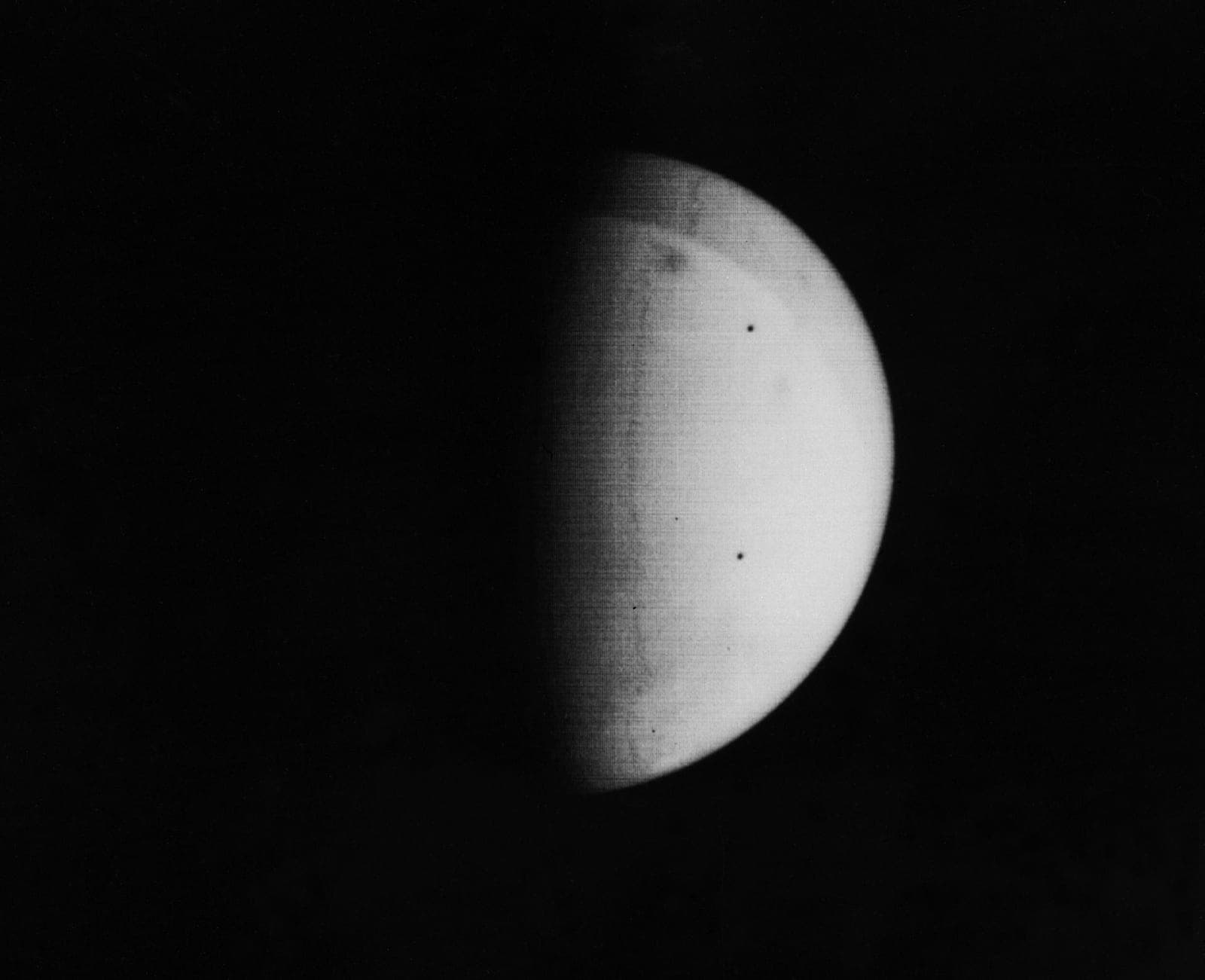
The first spacecraft ever to orbit another planet reached Mars to find the surface hidden by dust. It waited, then mapped volcanoes, a 4,000 km canyon and dry riverbeds.
Von Braun had twelve astronauts leaving Earth orbit on 12 November 1981 aboard two nuclear ships. Seven months later Nixon put Mars behind a rigorous system of national priorities.
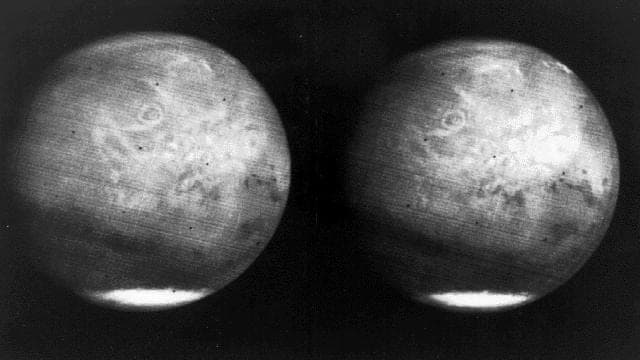
Two flybys returned 201 pictures and pinned the atmosphere at 6 to 7 millibars, but both happened to cross the oldest, dullest terrain on Mars.
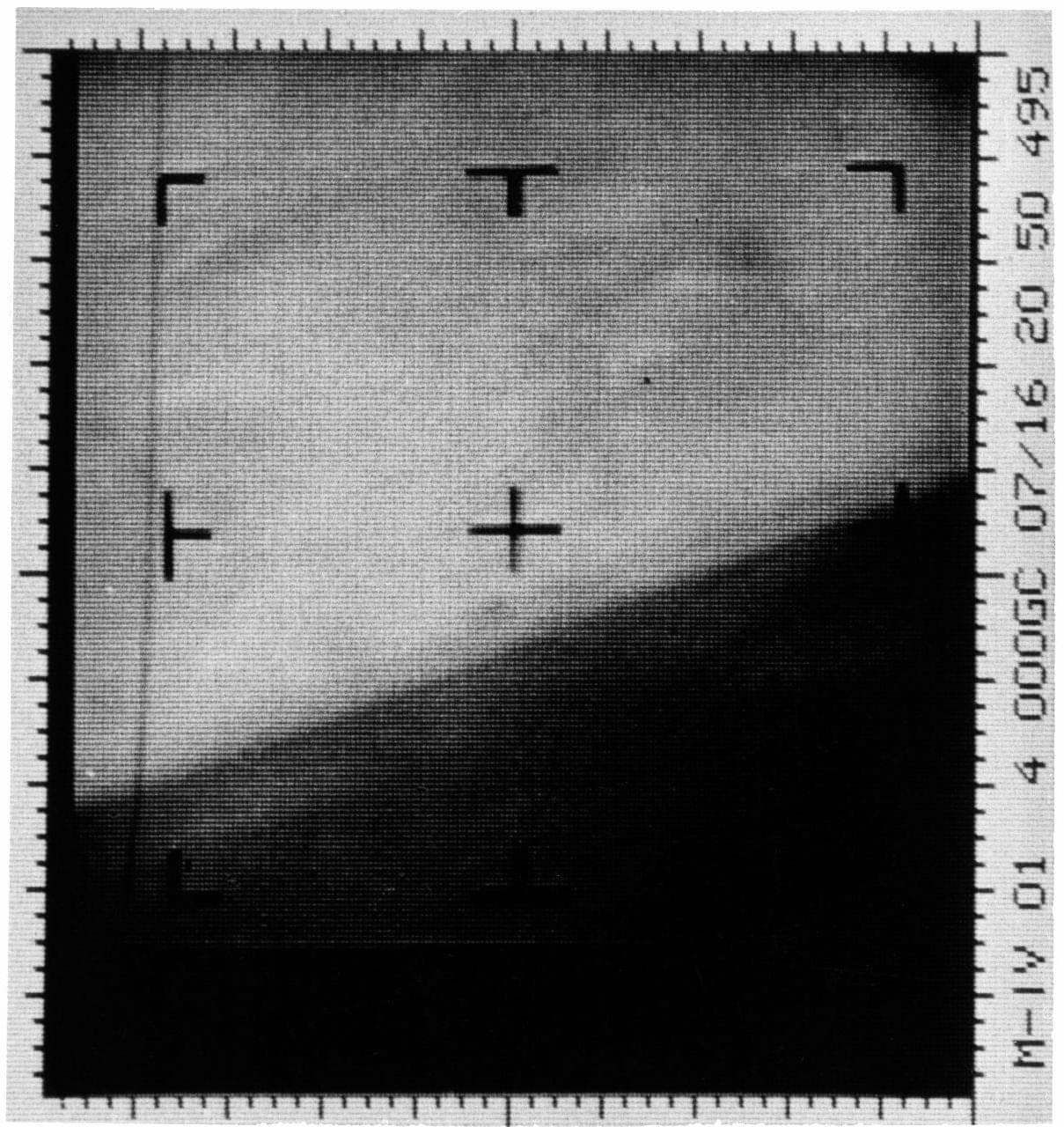
Twenty-one grainy frames replaced the canals with craters, and a radio occultation put the surface pressure near one percent of Earth's.
Between 1960 and 1962 the Soviet Union launched five probes at Mars. Four never escaped Earth; the fifth, Mars 1, fell silent 106 million kilometres out.
Machines arrive
1960 – 1979, 11 milestones
Two decades of mostly failure, punctuated by the handful of spacecraft that made it. Mariner 4 sent twenty-one photographs that killed the living Mars in a single afternoon. Viking landed anyway.
Ten ships, seventy crew, and 950 launches to assemble the fleet in Earth orbit: the first Mars expedition worked out in real numbers, and never flown.
A lead-sulphide cell on the 82-inch at McDonald Observatory found the first molecule ever confirmed in the air of Mars: carbon dioxide. Water vapour stayed hidden until 1963.
Four nights before opposition, the 83-centimetre Meudon refractor showed Antoniadi a Mars crowded with irregular detail and not one straight line.
Lenin's rival inside the Bolshevik party wrote a Mars that is already communist, running out of raw material, and debating whether to take Earth and remove the humans.
Wells's Martians land near Woking, burn Surrey with a heat-ray, and die of bacteria. The invading alien enters the culture and never leaves it.
A wealthy Bostonian put a telescope on a 7,200-foot ridge in Arizona to map a Martian irrigation network. The work was meticulous and entirely wrong.
Schiaparelli mapped Mars through the 1877 opposition and crossed it with fine dark lines he called canali — channels. English made them canals, and the word did the rest.
Mars came within 56 million kilometres in 1877. Hall had nearly given up the search when, six nights apart, he caught Deimos and then Phobos.
The Mars we invented
1877 – 1959, 8 milestones
Good observers, real telescopes, and one of the most thorough wrong answers in the history of science. The canals were never there, but the Mars they created — inhabited, dying, reachable — is the one that sent us.
Ten years of watching through a 95 mm refractor in a Berlin garden produced the first true map of another planet — and a prime meridian Mars still uses.
Herschel put the tilt of Mars near 29 degrees, read the shrinking polar caps as seasons, and concluded its inhabitants probably lived much as we do.
Observing the same Mars opposition from Paris and Cayenne gave the first sound distance to the Sun: about 140 million km, seven per cent short of the true value.
Huygens sketched a dark triangle on Mars, watched it come back night after night, and concluded a Martian day runs about 24 hours. He was 37 minutes out.
A stubborn eight-arcminute gap between Tycho's Mars positions and every possible circular orbit forced Kepler to the ellipse, and rebuilt astronomy around it.
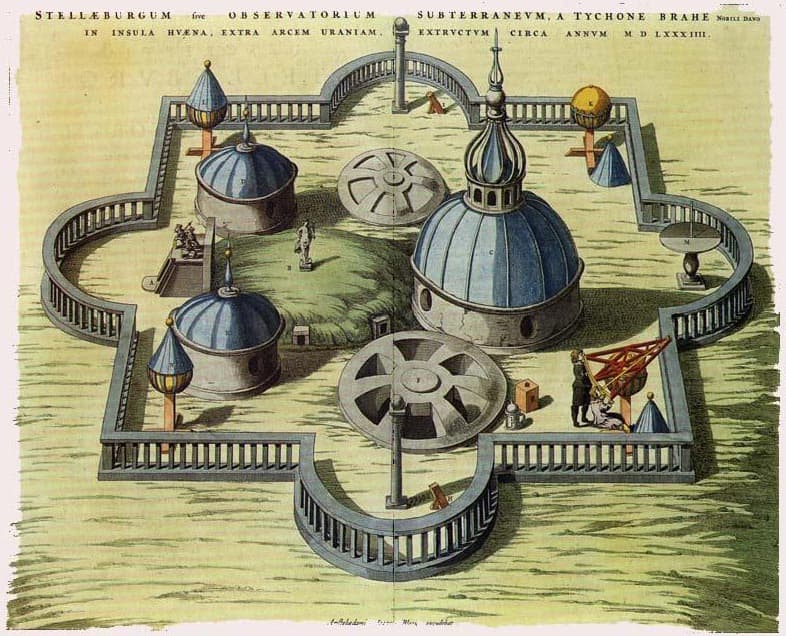
Tycho fixed Mars to about an arcminute with sighting instruments alone, cross-checking with duplicate observers and correcting for refraction — and the logbooks went to Kepler.
Mars gets a face
1576 – 1876, 6 milestones
Three centuries in which Mars turned from a light into a surface. It also became the specific planet whose orbit refused to be a circle, and in doing so broke two thousand years of astronomy.
De revolutionibus turned Mars's retrograde loop into a trick of perspective — Earth overtaking it on the inside. The predictions were no better than Ptolemy's.
Al-Battani re-measured every planetary motion, Ibn al-Haytham argued the equant was physically impossible, and Ibn al-Shatir built the models Copernicus would mirror.
The Aryabhatiya assigns Mars 2,296,824 orbits per 4,320,000-year cycle. Work it through with his own day count and the period is 686.9997 days; the modern value is 686.98.
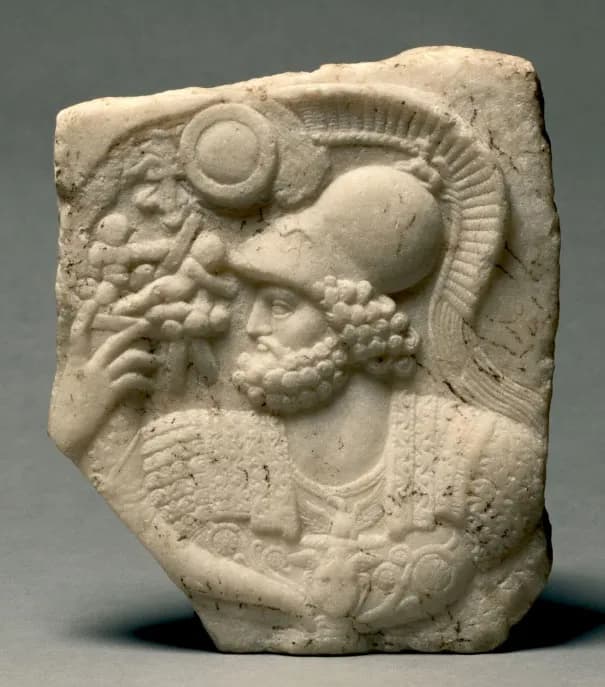
To fit Mars, Ptolemy let it sweep its circle at a steady rate around a point that was not the centre — a cheat that broke Greek doctrine and worked for 1,400 years.
A silk manuscript buried at Mawangdui gives working cycles for Jupiter, Saturn and Venus and none at all for Mars — the one planet that refused to keep a schedule.
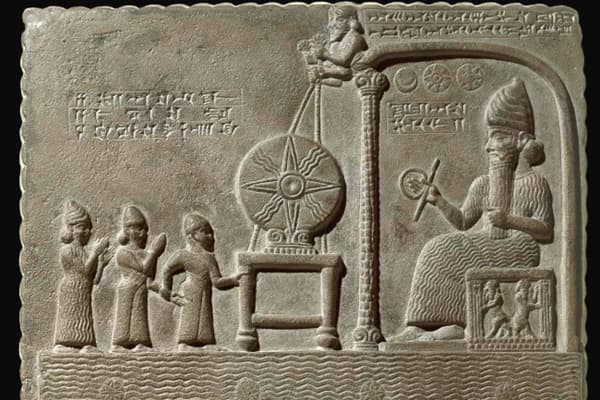
Babylonian scribes logged Mars beside barley prices for six centuries, then used a 79-year repeat to predict where it would be — with no model of why.
On the painted ceiling of Senenmut's tomb at Thebes, four planets ride their sacred boats and a fifth boat sails empty. The empty one is probably Mars.
A wandering red light
c. 1500 BCE – 1543, 7 milestones
For three thousand years Mars was a red point of light that moved strangely, and every civilisation that watched it built a story to explain the motion. Some of those stories were mythology. Some were mathematics good enough to predict where it would be.
3.7 billion years earlier
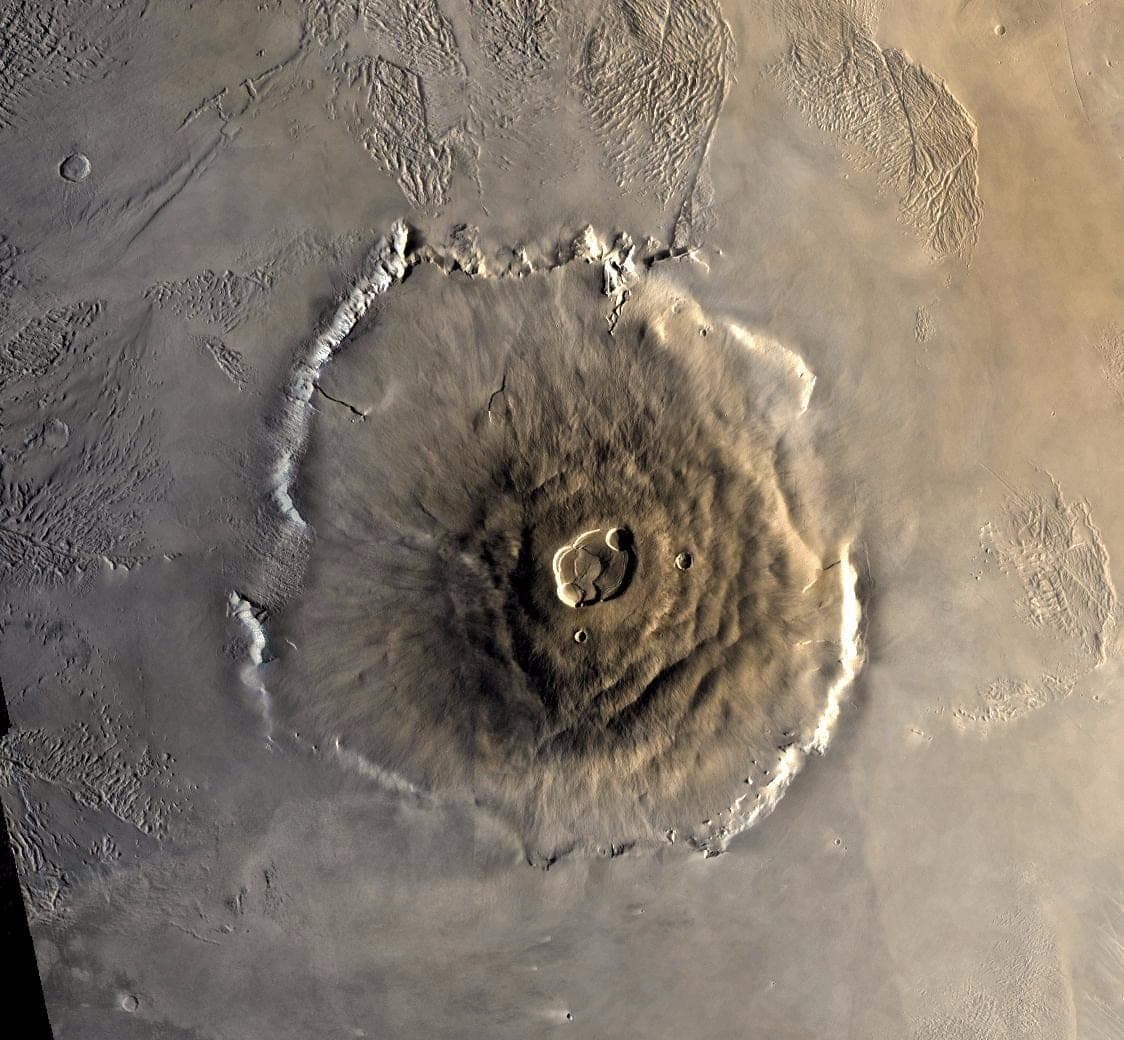
Three hundred million cubic kilometres of magma built a bulge across a quarter of Mars, raised Olympus Mons some 22 km, and probably tipped the spin axis about 20 degrees.
Thousands of branching valleys and a delta in Jezero crater show water flowed for a long time. Whether it ever pooled into a northern ocean is still argued.
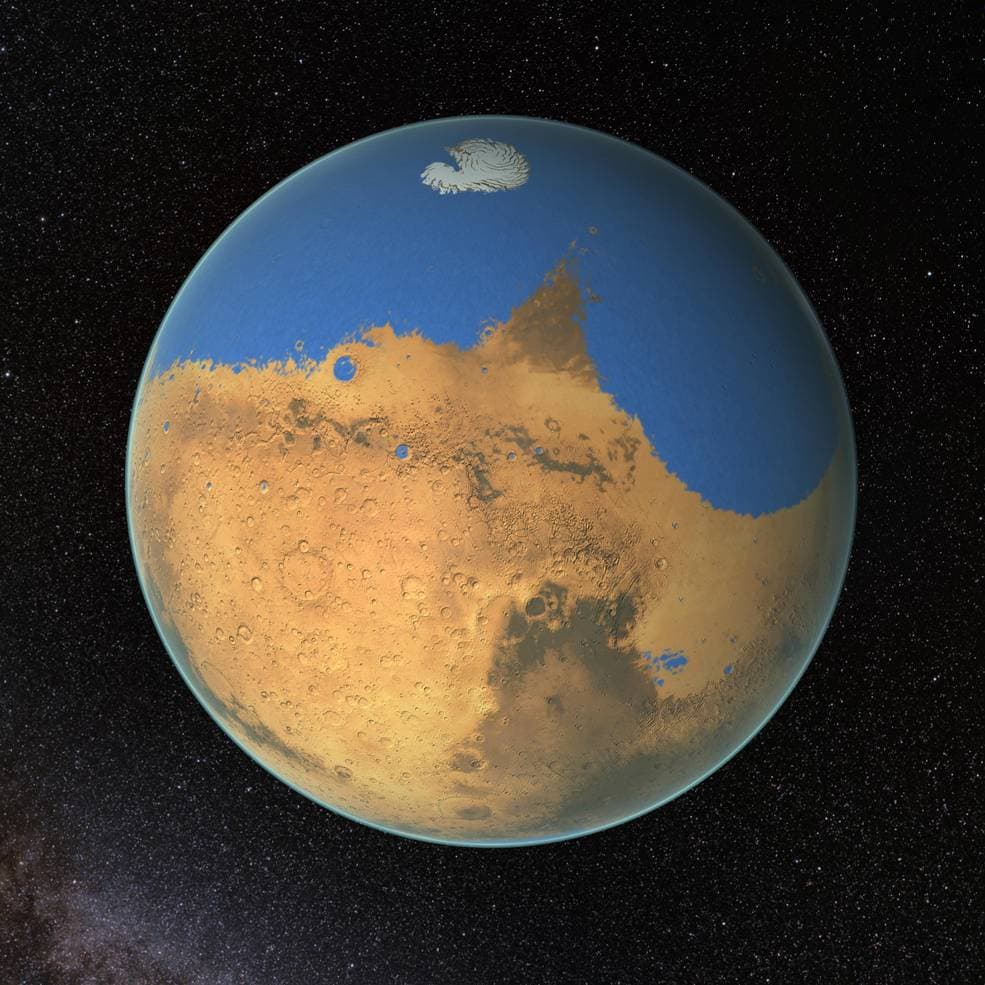
Mars Global Surveyor found the oldest crust magnetised and the great impact basins blank — read as a dynamo dead inside the first half-billion years, though MAVEN data since has reopened the date.
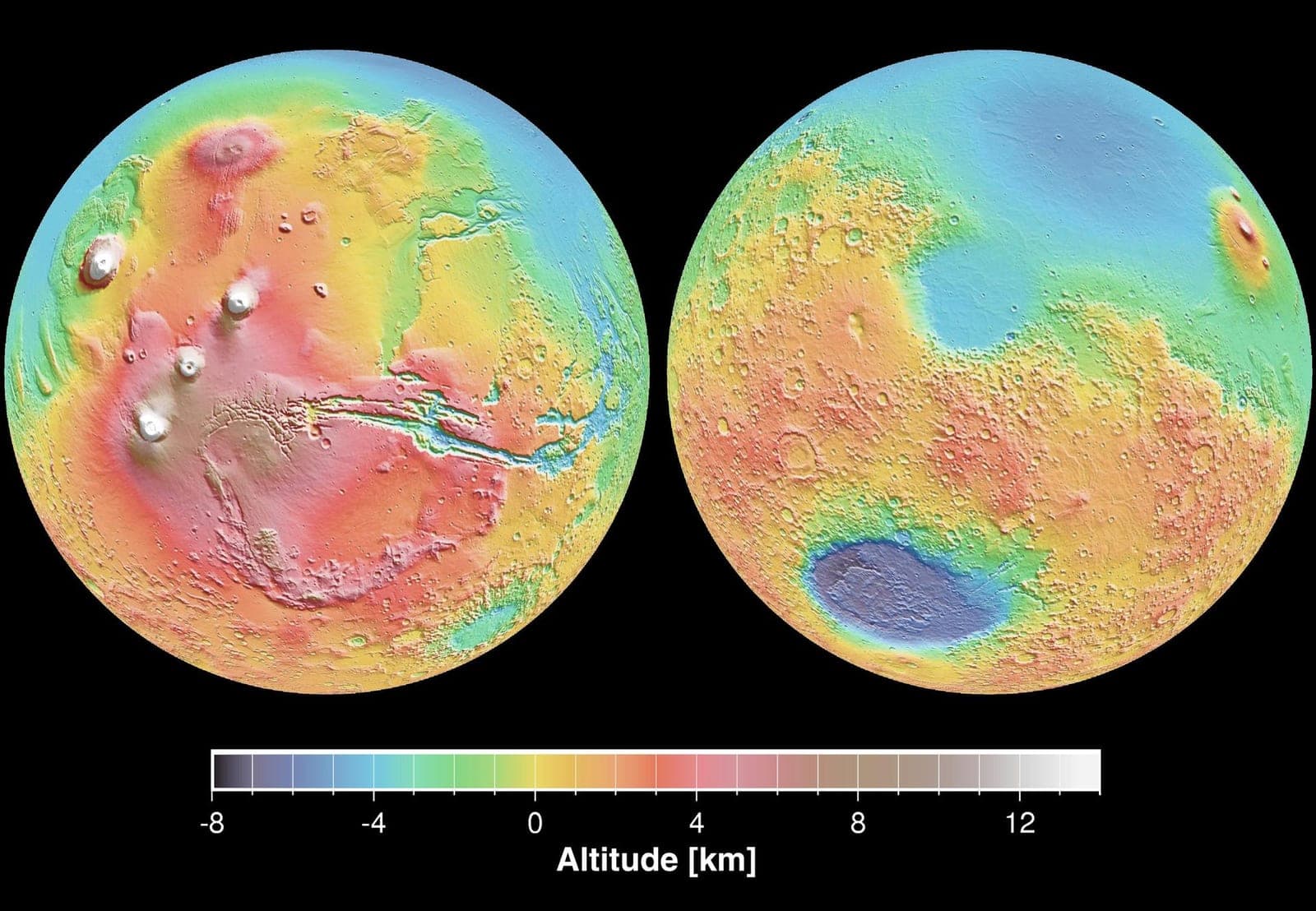
The northern lowlands sit 5 km below the southern highlands. The boundary traces an ellipse 10,600 km across — plausibly the largest impact scar in the solar system.
Molten iron drained to the centre in a few million years, building a core roughly half the planet's radius — how much has been re-argued twice since 2021 — and its churning gave Mars a magnetic field.
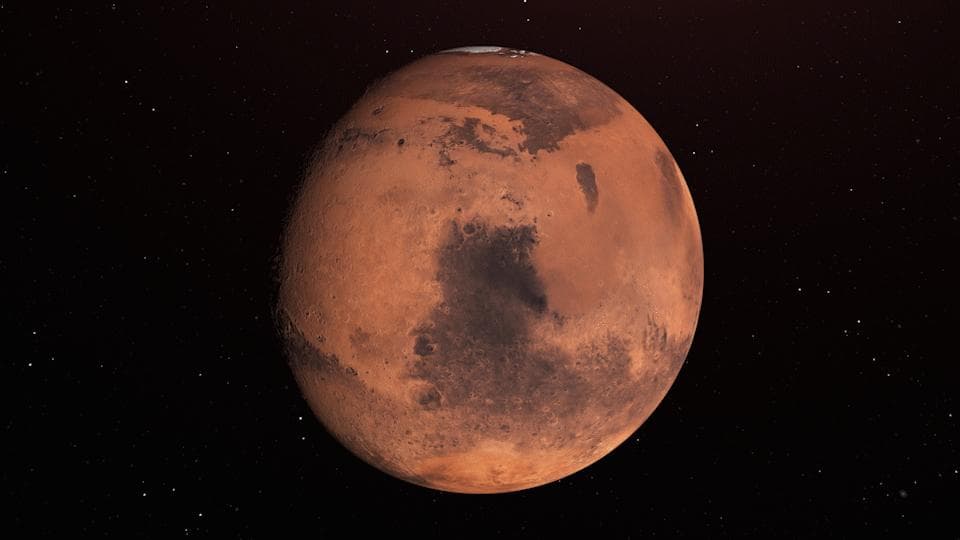
Hafnium–tungsten dating puts Mars at half its present size within two million years of the solar system's birth. Then it quit growing, at a tenth of Earth's mass.
A world takes shape
4.6 – 3.7 billion years ago, 6 milestones
Before anyone could look at Mars, Mars had to become the thing that would later disappoint us. It formed small, ran warm and wet for a while, then lost the magnetic field that was holding its atmosphere in place.