Two small orbiters end a five-year launch drought
Nothing had left Earth for Mars since July 2020. ESCAPADE's twin orbiters broke the drought — then parked at a Lagrange point to wait a year for the transfer window.
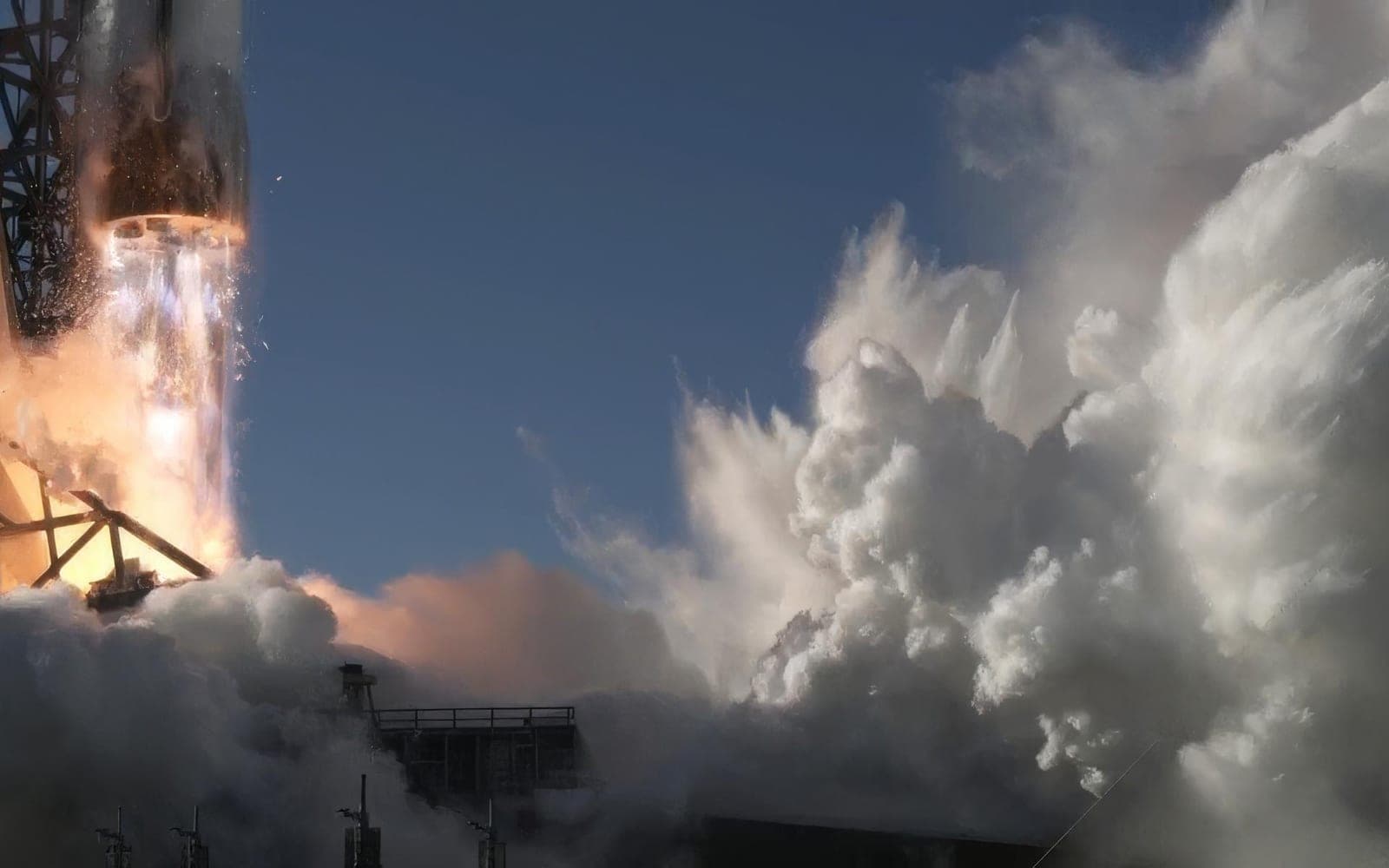
A Blue Origin New Glenn lifted off from Cape Canaveral at 3:55 p.m. EST on 13 November 2025 carrying two spacecraft about the size of washing machines, 535 kilograms each fuelled. Blue and Gold separated from the upper stage a little over half an hour into the flight. Down below, the first stage had already landed on a ship in the Atlantic — the first New Glenn booster ever recovered. It was also the first time in five years and four months that a Mars mission had left Earth at all.
Two transfer windows went by unused, back to back. The 2022 window should have carried ESA's Rosalind Franklin rover, but Russia was supplying the launcher and the landing platform, and ESA cut its ties with Roscosmos after the invasion of Ukraine — the finished rover went into storage and is now aimed at 2028, a decade behind its original date. The 2024 window passed with nothing at all.
ESCAPADE is a deliberately cheap mission: two identical orbiters built by Rocket Lab for the Space Sciences Laboratory at UC Berkeley under NASA's small-planetary-missions line, for 75 million dollars all in — 55 for the spacecraft and instruments, 20 for the rocket. Each carries a magnetometer, an electrostatic analyser and a Langmuir probe. Flying two is the whole point. A single spacecraft measuring a change in Mars's magnetosphere cannot tell whether the magnetosphere changed or whether the spacecraft simply moved somewhere different. Two, at separated points, can untangle time from space — which is what is needed to watch the solar wind actually stripping the atmosphere away, the process that turned a wet planet into this one.
Because New Glenn's debut slipped past the 2024 window, ESCAPADE launched without a trajectory to Mars. It went instead to a loiter orbit around the Earth–Sun L2 point, about 1.5 million kilometres out on the night side, where the twins have been tracing a slow kidney-shaped loop ever since. They have not been idle: NASA has them measuring space weather from out there, a million miles upwind of Earth, with the same instruments that will later have to agree with each other at Mars. It has not been entirely smooth: one of the pair underperformed on a thruster burn in December 2025, delaying its next trajectory correction.
As of late September 2026 they are still out there. The Trans-Mars Injection burn is scheduled for November 2026, followed by a cruise of roughly ten months and orbit insertion at Mars in September 2027. With that burn and Japan's MMX both manifested for it, the 2026 window will be the busiest since 2020 — which says more about the last six years than about this one.