MMX leaves for Phobos to bring back a sample
Japan's MMX left Tanegashima on an H3 rocket for Phobos, the larger moon of Mars. It is to collect at least 10 grams of the moon's surface and bring them to Earth in 2031.
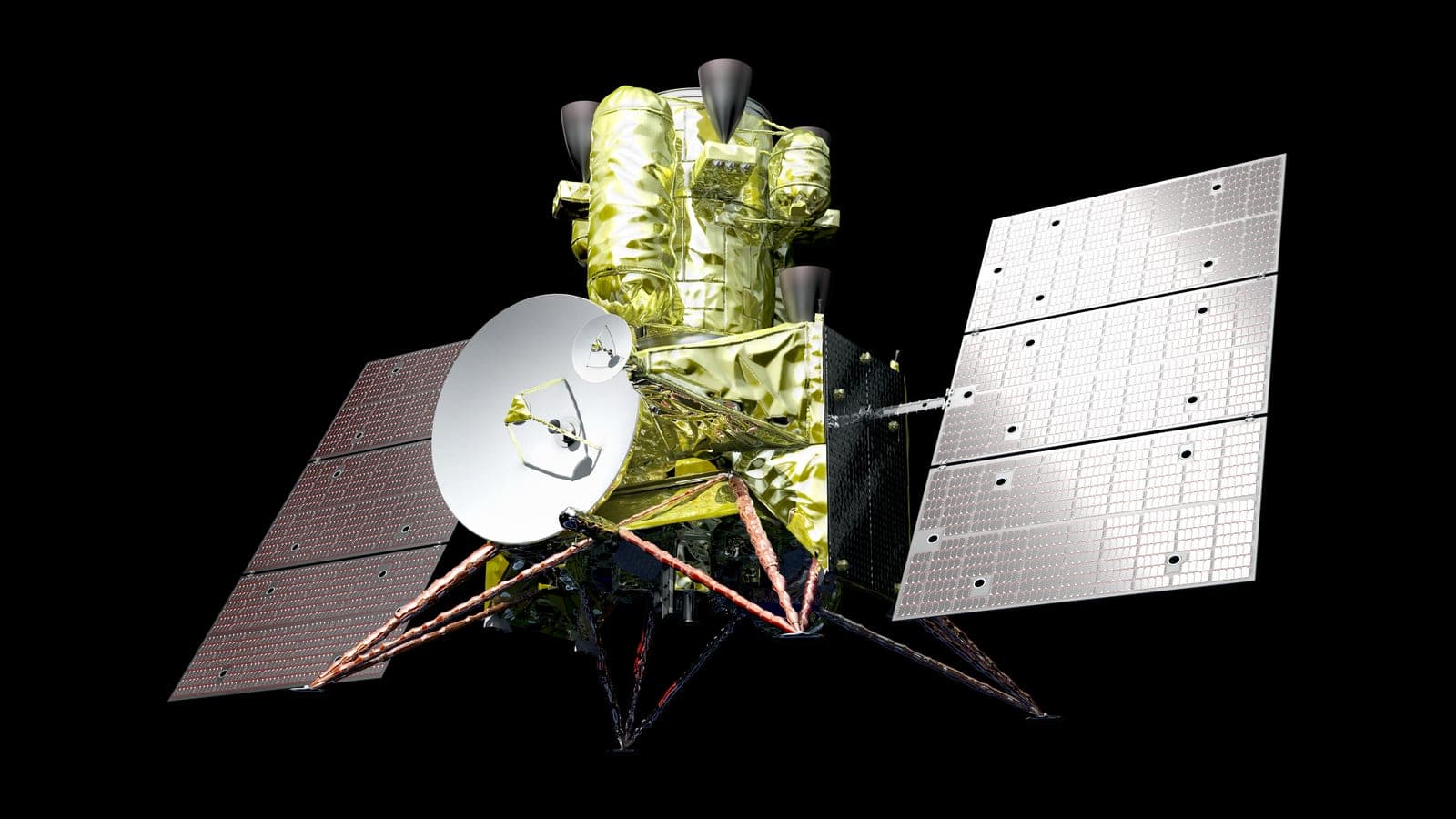
At 04:41:03 JST on 20 October 2026, 19:41 UTC on the 19th, an H3 rocket lifted off from the Tanegashima Space Center carrying JAXA's Martian Moons eXploration spacecraft, MMX. It flew in the H3's most powerful configuration, with four solid rocket boosters. About 71 minutes after liftoff the 4,480 kg spacecraft separated from the rocket on its planned path to Mars, and the next day JAXA said its first operations were complete and the spacecraft was in good health.
MMX is due to reach Mars about a year after launch and go into orbit around Phobos, the larger of the planet's two moons. A 25 kg rover, IDEFIX, built by the French and German space agencies CNES and DLR, is to be released first, around the turn of 2028 and 2029; the main spacecraft is then to land and collect at least 10 grams of surface material. It is to observe Deimos, the outer moon, before leaving in 2030, and send its sample capsule down to Australia in 2031. NASA supplied a sampler and a gamma-ray and neutron spectrometer, and is to receive about 15 percent of the sample.
JAXA says the material should show where the moons came from: debris from a giant impact on Mars, or asteroids captured by its gravity. Phobos is also thought to be covered with rock knocked off Mars by impacts, so JAXA says the sample may include material from Mars.
MMX would be the first mission to bring material back from the Mars system. Earlier missions to Phobos failed: the Soviet Union lost both of its Phobos spacecraft in 1988 and 1989, and Russia's Phobos-Grunt failed soon after launch in 2011. MMX had been due to launch in September 2024. In December 2023 Japan's government moved it to 2026. JAXA said it needed time to evaluate the second flight of the H3, whose first flight had failed in March 2023, and to check the spacecraft on the ground.